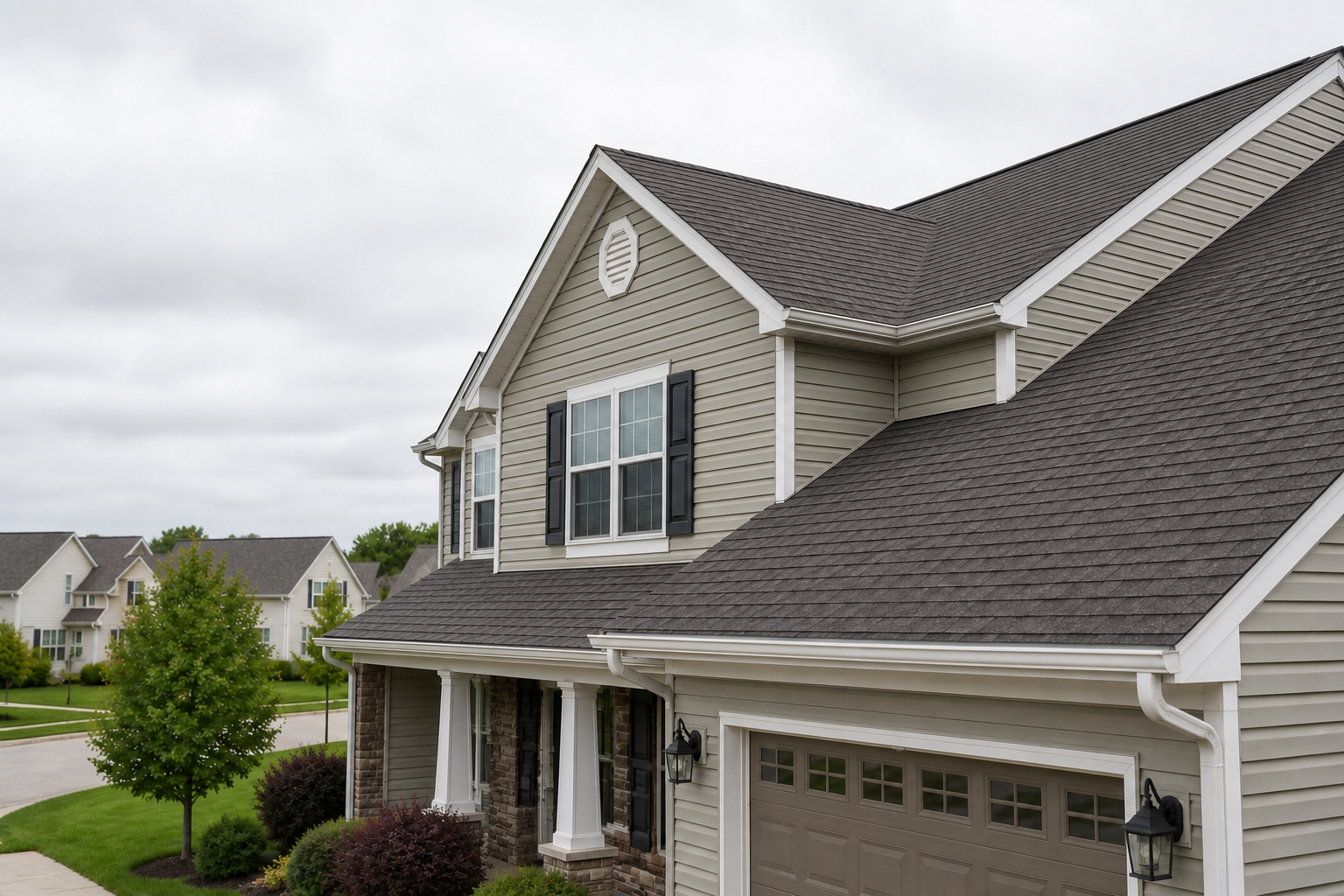
Permits are never the same twice
Every town we work in requires a permit and an inspection for a full reroof, but the process behind that requirement is different in each one. Some towns turn a permit around in a day. Others want more documentation up front, especially where wildfire rules have tightened since the Marshall Fire. We keep a running list of what each building department wants to see, so a homeowner in Erie is not left waiting on paperwork that only applies over in Louisville.
HOA rules follow the age of the neighborhood
Older neighborhoods, the kind with three or four decades of re-roofing behind them, rarely have a color list to check with anyone. Newer subdivisions almost always do, whether that is Legacy Ridge, Indian Peaks, Vista Ridge or Rock Creek. We confirm the approved shingle colors before we order material, because reordering after delivery costs everyone time, and a homeowner should never find out about a color rule from a rejection letter taped to the door.
Wildfire codes stop at some town lines and not others
Since the fire that tore through Louisville and Superior at the end of 2021, both towns have adopted stricter requirements for fire-rated roofing assemblies, ember-resistant venting and non-combustible gutters. Cross into Broomfield, Lafayette or Erie and those same requirements are not yet written into code, even though the risk along the foothills does not stop cleanly at a municipal boundary. We build toward the stricter standard whenever a homeowner is open to it, whichever side of the line their house happens to sit on.
Housing age decides the job before we climb the ladder
A roof in Old Town Louisville or Old Town Lafayette usually means board sheathing under the shingles and a deck that needs an overlay before anything else can happen. A roof off Huron Street or in a neighborhood like Heritage Todd Creek usually means checking how many layers of shingles are already stacked up there and whether the attic was ever properly vented in the first place. The town tells us roughly what decade we are dealing with, and that tells us most of what to expect before the ladder is even off the truck.
Weather shifts with the foothills
Superior and Louisville sit closest to the foothills and feel the downslope winds the hardest, which is why every roof we install there gets nailed to a high-wind pattern without exception. Erie and Thornton sit further out on open ground, where storms have room to build before they arrive and hail tends to do more of the damage than wind does. Broomfield sits in the middle of all of it, which is part of why we plan for both risks on every job here rather than betting on just one.
Why it is worth knowing before you call someone
None of this changes what a roof is built from, but it changes how the job gets planned, scoped and scheduled with the town it sits in. A crew that treats every town the same ends up guessing at permits, missing an HOA rule, or building to the wrong code for where the house actually stands. We would rather work out the difference going in than have to explain a delay once the crew is already on the roof.
How this shapes our week
In practice this means our schedule for a given week is never just a list of addresses. A Tuesday might start with a permit drop-off in one town, move to an HOA color confirmation in another, and end with a wind repair on an older roof where none of that paperwork applies at all. We plan the route that way on purpose, because grouping jobs by town rather than by job type is usually the fastest way to get everyone taken care of without missing a step that only matters on one side of a line on the map.