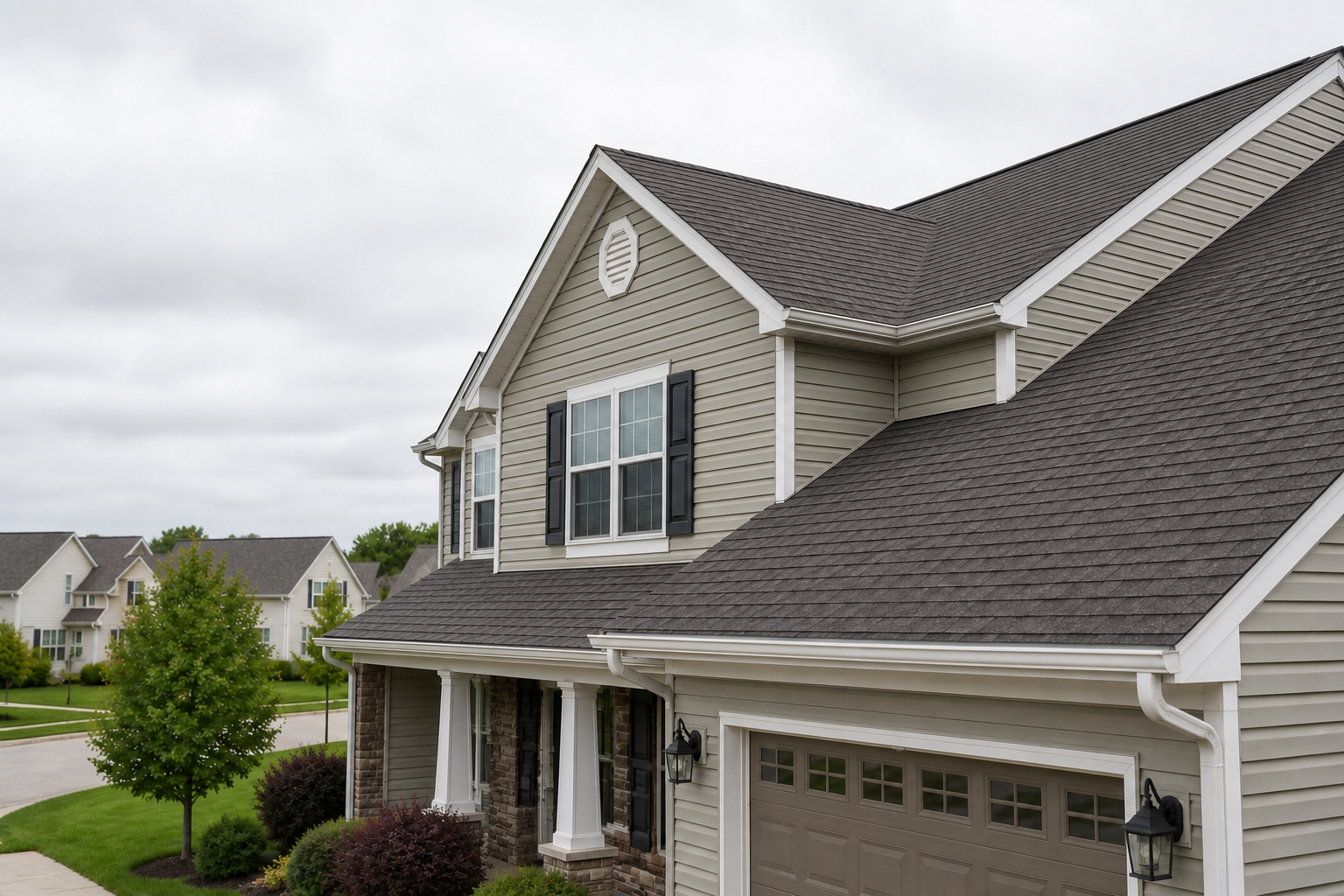
Why shingles do not belong on a low-slope roof
Asphalt shingles rely on gravity to shed water. Below a certain pitch, water sits, wind pushes it uphill under the laps, and the roof leaks. Shingle manufacturers set a minimum slope for a reason, and a great many low-slope leaks we see on older Broomfield homes trace back to someone ignoring it.
The correct materials for these roofs are continuous membranes that do not depend on slope: single-ply sheets, modified bitumen rolls, or fluid-applied systems.
Membrane options
TPO is a heat-welded white sheet that reflects sun and handles our summer heat well. EPDM is a black rubber sheet, very durable in freeze-thaw cycles and easy to repair years later. Modified bitumen is an asphalt-based roll roofing with a granulated surface that looks more like a traditional roof and stands up well to foot traffic.
For a residential addition or patio cover we usually lean toward TPO or modified bitumen, depending on how visible the roof is and what it ties into. For a commercial building the decision leans on drainage, insulation and warranty requirements.
Snow, ice and drainage
A flat roof in Broomfield will hold snow. Drifting against a parapet or a taller wall can pile it deep, and repeated freeze-thaw turns the bottom of that pile into ice. Drains and scuppers need to stay clear, and the roof needs enough slope, usually built in with tapered insulation, to move meltwater off before it refreezes.
We look at where the water goes on every low-slope job. If the answer is nowhere, we fix that before we put down a membrane.
Hail on a flat roof
Hail is harder on flat roofs than on pitched ones because the stones hit square rather than at an angle. A thin membrane over soft insulation will pit and eventually fracture. We specify thicker membranes and a rigid cover board beneath them on any roof that has to survive a Front Range summer.
After a hailstorm a flat roof should be walked. Damage that would be obvious on shingles can hide on a membrane until the first heavy rain.
Tying a low-slope roof into a shingle roof
The transition where a flat porch or addition roof meets the main pitched roof is one of the most common leak points on a Broomfield house. It needs proper flashing, a membrane that runs well up under the shingles, and careful attention to where water from the upper roof lands.
We detail these transitions ourselves rather than leaving them to whichever crew arrives second, because they are where roofs fail.