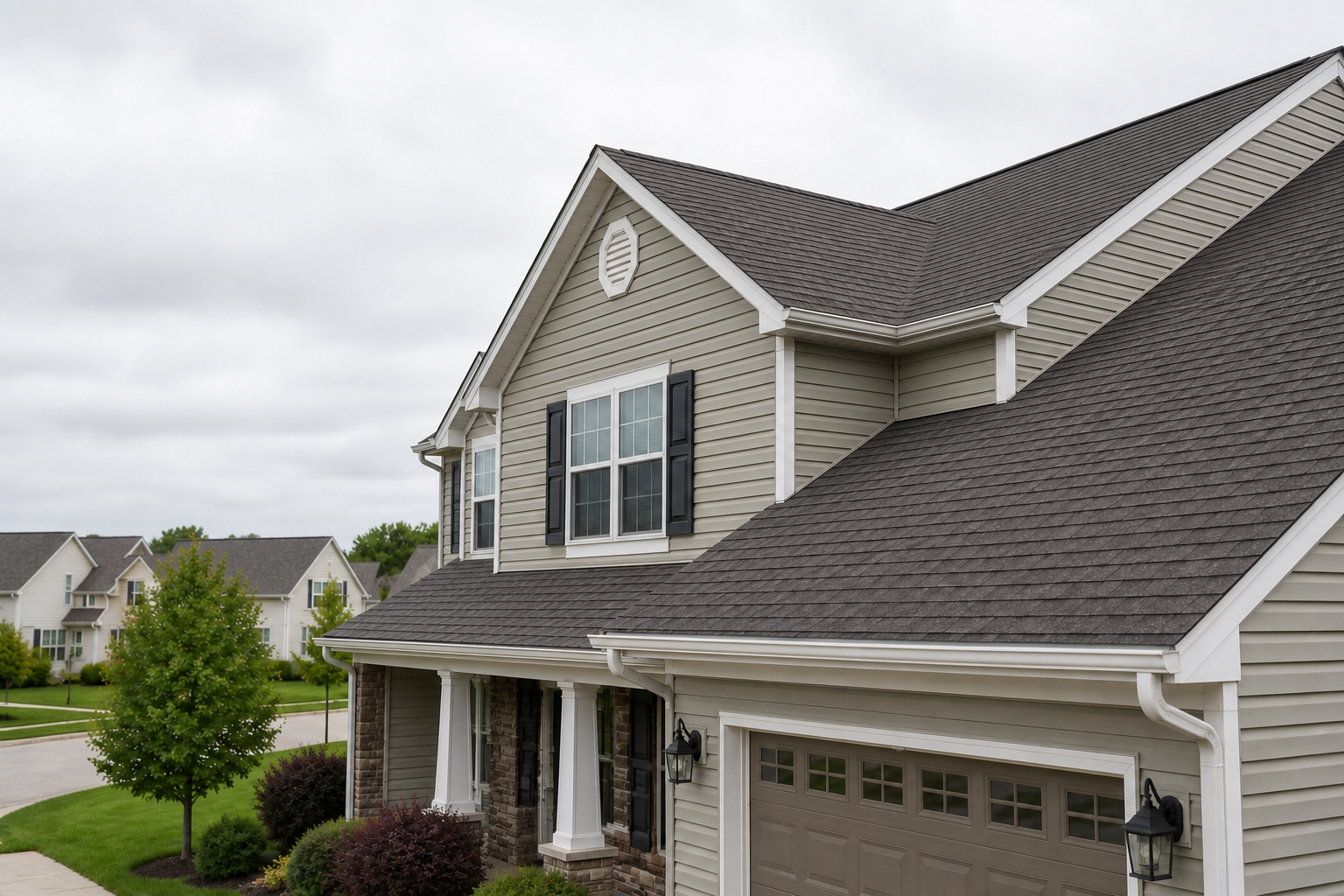
The repairs we see most
Cracked rubber pipe boots are probably the single most common leak source on Broomfield homes; the high-altitude sun splits them after a decade or so. Right behind them are lifted or missing shingles after a wind event, failed flashing at chimneys and sidewalls, nail pops that let water in, and skylights whose seals have given up.
Hail adds bruised shingles and dented vents. Winter adds ice-dam damage at the eaves. Most of these are contained repairs when caught early.
Finding the real source
Water rarely comes into the house directly under the hole in the roof. It runs along rafters, underlayment and drywall before it shows. We start inside, at the stain, and work backward to the roof. Then we get on the roof and check the likely suspects above and uphill of the stain.
We would rather spend an extra half hour finding the actual cause than replace three shingles that were never the problem.
How we do a repair
A proper shingle repair means lifting the surrounding shingles without tearing them, removing the damaged one, sliding in a matching replacement, and re-sealing. Flashing repairs mean removing and replacing the flashing rather than smearing caulk over it. Boot replacements mean a new boot, ideally a longer-lasting metal or silicone type, not a bead of sealant around the old one.
Every repair gets a photo before and after so you can see what was done.
When a repair is not enough
If the shingles are brittle enough that lifting them causes more damage, if the roof has multiple layers, or if the problem is spread across several slopes, a repair becomes a short-term patch. We will tell you that plainly and explain what a replacement would involve, but we will never push a new roof on a house that only needs a repair.
Roofs on older homes in neighborhoods like Greenway Park or the Broomfield Heights area often reach that point after a couple of hail seasons; newer subdivisions rarely do.
Emergency repairs
When a storm opens up a roof, the priority is keeping water out until a permanent repair can be done. We tarp and secure damaged areas properly, with the tarp anchored to solid framing and lapped so wind cannot get under it. A tarp thrown over the ridge and weighted with a couple of boards does not survive a Front Range wind night.
Once the weather clears we return for the permanent fix.