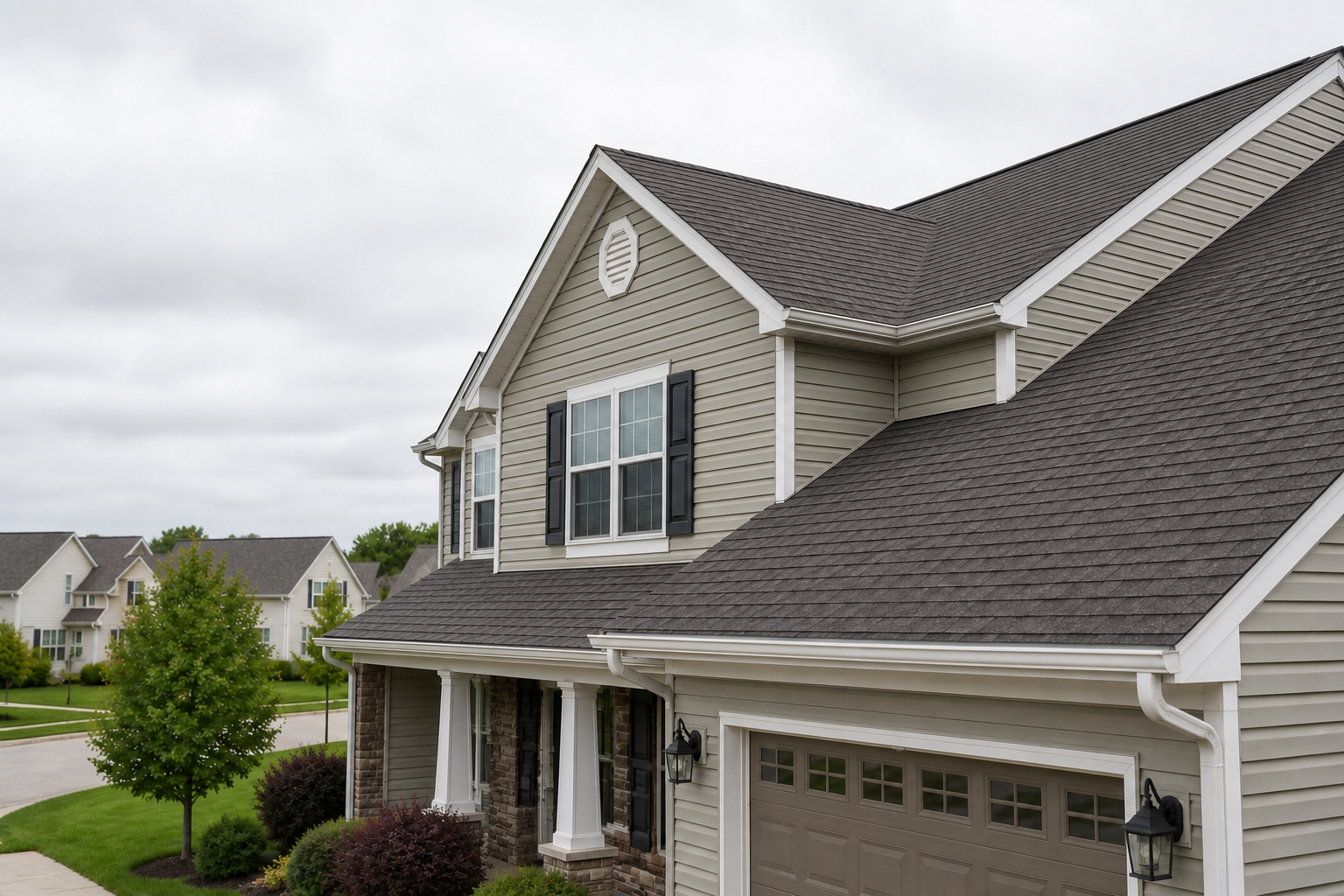
Three-tab shingles
Three-tab shingles are the flat, uniform shingles found on many Broomfield homes built in the seventies through the nineties. They are the least expensive option and the least durable. They have low wind ratings, thin mats that bruise easily in hail, and short warranties.
We rarely recommend them here. The savings up front are erased by the first significant storm.
Architectural shingles
Architectural, or dimensional, shingles are thicker, layered shingles with a textured look. They carry higher wind ratings, longer warranties, and hold up better to hail than three-tab. They are the default for new roofs across the Denver metro and come in a wide range of colors.
For most homes the choice is not whether to use architectural shingles, but whether to step up to the impact-rated version.
Class 4 impact-rated shingles
Class 4 is the highest rating in the UL 2218 impact test, which drops steel balls onto the shingle to simulate hail. A Class 4 shingle uses a reinforced or rubberized asphalt mat that flexes instead of fracturing. In our experience these shingles come through a typical Broomfield hailstorm with far less damage than standard architectural shingles.
Most Colorado insurers discount premiums for a Class 4 roof. Given how often hail visits this part of the state, we consider them the sensible default.
Metal and other alternatives
Standing-seam metal roofs shed snow, resist hail dents better than most people expect, and last decades. Stone-coated steel panels look like shingles or tile and perform similarly in hail. Both cost more up front and both are excellent in Front Range wind. Concrete tile is heavy and can crack in large hail, and we recommend it cautiously here.
Wood shake is largely off the table in this area because of wildfire concerns and its poor performance in hail.
Things that matter regardless of shingle
Even the best shingle fails on a bad installation. The nailing pattern, the underlayment, the ice and water shield, the flashing and the ventilation determine whether the shingle gets to reach its rated life. High-altitude UV and heat also mean attic ventilation matters more here than in cooler, lower places.
Ask any roofer not just which shingle they use, but how they install it.